

Exercise 1: Language immersion
Instruction: Watch the video and answer the related questions.
Fetching your corrections... Please don't close this page yet.
| Word | Translation |
|---|---|
| El médico | the doctor |
| El centro de salud | the health center |
| Sin colas | no queues |
| El colegio | the school |
| La farmacia | the pharmacy |
| Las panaderías | the bakeries |
| Los bares | the bars |
| Un supermercado | a supermarket |
| Los servicios | the services |
1. ¿Quién es Virgilio Antón en Santa Cruz de Moya?
(Who is Virgilio Antón in Santa Cruz de Moya?)2. ¿Dónde está Santa Cruz de Moya?
(Where is Santa Cruz de Moya?)3. ¿Cómo es el centro de salud?
(How is the health center?)4. ¿Qué servicios hay en el pueblo?
(What services are there in the town?)Exercise 2: Dialogue
Instruction: Read the dialogue and answer the questions.
Fetching your corrections... Please don't close this page yet.
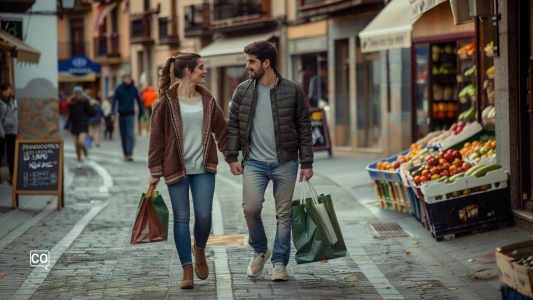
Marcos y Eva hacen algunos recados por el pueblo
| 1. | Marcos: | ¿Me acompañas esta mañana? Tengo que dejar a los niños en el colegio y después pasar por el centro de salud. | (Will you come with me this morning? I need to drop the kids off at school and then stop by the health center.) |
| 2. | Eva: | Claro. Yo también tengo que ir al médico esta mañana. | (Sure. I also have a doctor’s appointment this morning.) |
| 3. | Marcos: | ¿Al centro de salud o al hospital? | (To the health center or to the hospital?) |
| 4. | Eva: | Al centro de salud. Tengo que entregar unos papeles. | (To the health center. I need to drop off some paperwork.) |
| 5. | Marcos: | Entonces podemos ir juntos, así aprovechamos el tiempo. | (Then we can go together; that way we’ll make the most of our time.) |
| 6. | Eva: | Perfecto. Después podemos ir al supermercado. Necesito comprar algo para la comida de hoy. | (Perfect. Afterwards we can go to the supermarket. I need to pick up something for today’s meal.) |
| 7. | Marcos: | Y ya que estamos, podemos parar en la panadería de la avenida. Tienen buen pan integral. | (And while we’re at it, we can stop at the bakery on the avenue. They have good whole-wheat bread.) |
| 8. | Eva: | ¿Y si al final tomamos un café en la cafetería del centro? | (How about we finish with a coffee at the café downtown?) |
| 9. | Marcos: | Perfecto. Así hacemos todos los recados y terminamos con un buen café. | (Perfect. That way we’ll get all the errands done and finish with a nice coffee.) |
1. ¿Adónde van Marcos y Eva esta mañana?
(Where are Marcos and Eva going this morning?)2. ¿Qué quieren comprar en la panadería?
(What do they want to buy at the bakery?)Exercise 3: Use the website or the reading text
Instruction: You are new to Seville and need to go to a Local Police office for a non-urgent matter.
Fetching your corrections... Please don't close this page yet.
Show/hide translationsTask: Busca en la página la información solicitada.
Use in your answer: Atención al Ciudadano / horario / de lunes a viernes / de 9:00 a 13:00 / cita / UPB Centro
Learn Spanish for beginners: A structured A1 course for work and daily life
ISBN 979-13-88253-00-3
This app supports this book.