Polish grammar overview

Find Polish grammar tables, exercises, worksheets and presentations optimized for usage during conversation classes.
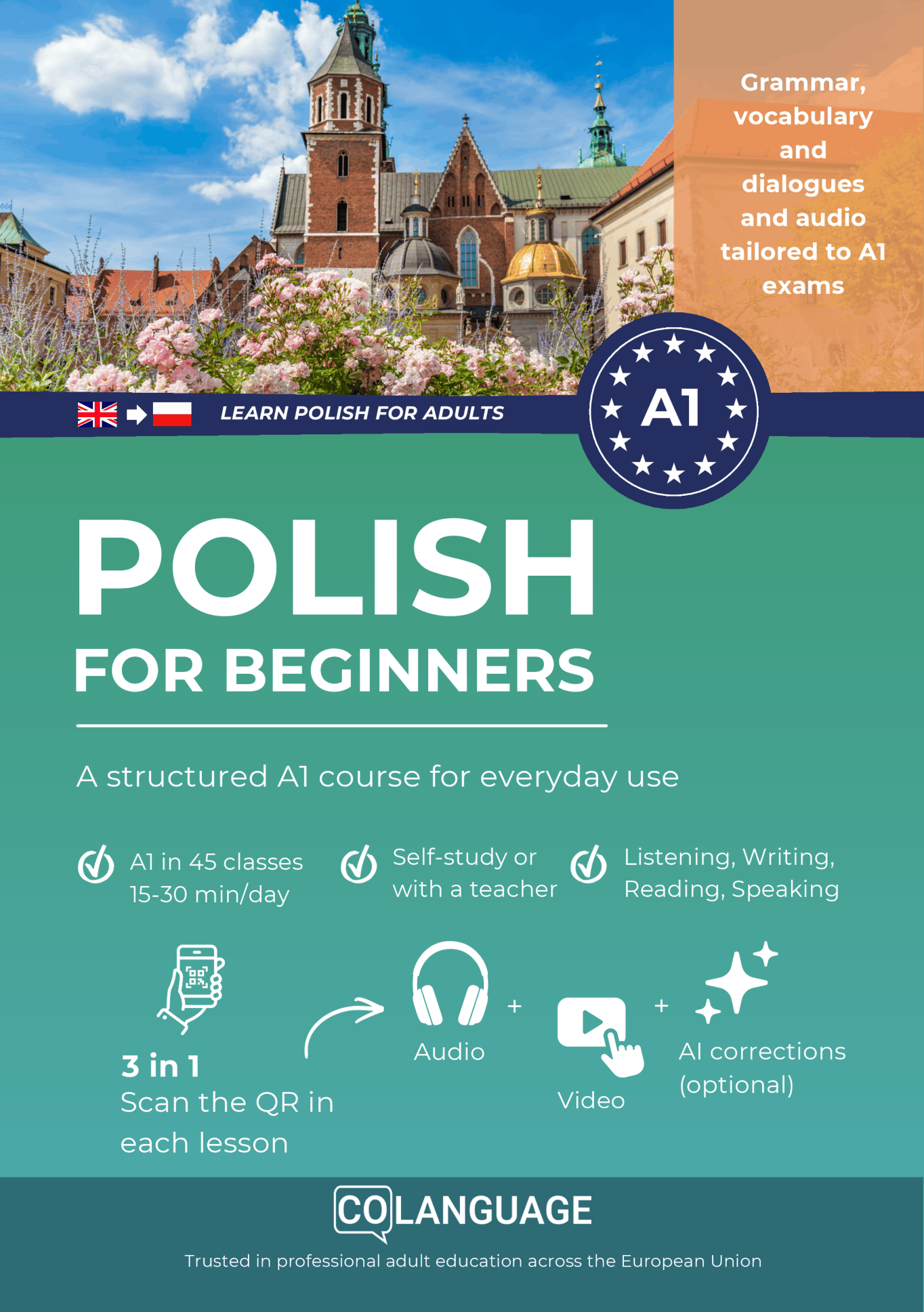
  • Applied grammar
  • Worksheets and exercises
  • Audio and video

Enroll now!

A1.1.2: Zaimki osobowe: ja, ty on, ona...” (Personal pronouns: ja, ty on, ona...)

Type: Pronouns
Chapter: Pozdrowienia i pożegnania (Greetings and Farewells)
Level: A1
Module 1 (A1): Przedstawienie samego siebie (To introduce oneself)

A1.2.2: Alfabet polski (Polish alphabet)

Type: Alphabet
Chapter: Podawanie swojego imienia (Telling your name)
Level: A1
Module 1 (A1): Przedstawienie samego siebie (To introduce oneself)

A1.2.3: Wymowa, intonacja i akcent w języku polskim (Pronunciation, intonation and stress in the Polish language)

Type: Alphabet
Chapter: Podawanie swojego imienia (Telling your name)
Level: A1
Module 1 (A1): Przedstawienie samego siebie (To introduce oneself)

A1.3.2: Liczba i rodzaj gramatyczny: dziecko, dzieci... (Number and grammatical gender: dziecko, dzieci...)

Type: Nouns
Chapter: Skąd jesteś? (Where are you from?)
Level: A1
Module 1 (A1): Przedstawienie samego siebie (To introduce oneself)

A1.3.3: Mianownik liczby pojedynczej rzeczowników i przymiotników kto? co? jaki? jaka? jakie? (Nominative singular of nouns and adjectives kto? co? jaki? jaka? jakie?)

Type: Nouns
Chapter: Skąd jesteś? (Where are you from?)
Level: A1
Module 1 (A1): Przedstawienie samego siebie (To introduce oneself)

A1.3.4: Wprowadzenie do przypadków: kto? co? kogo? komu? (Introduction to cases: kto? co? kogo? komu?)

Type: Nouns
Chapter: Skąd jesteś? (Where are you from?)
Level: A1
Module 1 (A1): Przedstawienie samego siebie (To introduce oneself)

A1.4.3: Liczebniki główne: setki, tysiące, miliony (Cardinal numbers: hundreds, thousands, millions)

Type: Numbers
Chapter: Liczby i liczenie (Numbers and counting)
Level: A1
Module 1 (A1): Przedstawienie samego siebie (To introduce oneself)

A1.4.4: Liczebniki główne od 11 do 20 (Cardinal numbers from 11 to 20)

Type: Numbers
Chapter: Liczby i liczenie (Numbers and counting)
Level: A1
Module 1 (A1): Przedstawienie samego siebie (To introduce oneself)

A1.4.2: Liczebniki główne od 20 do 99 (Cardinal numbers from 20 to 99)

Type: Numbers
Chapter: Liczby i liczenie (Numbers and counting)
Level: A1
Module 1 (A1): Przedstawienie samego siebie (To introduce oneself)

A1.5.2: Zaimki dzierżawcze: mój, moja, moje... (Possessive pronouns: mój, moja, moje...)

Type: Pronouns
Chapter: Rodzina (Family)
Level: A1
Module 1 (A1): Przedstawienie samego siebie (To introduce oneself)

A1.5.3: Rzeczowniki w bierniku: kogo? co? (Nouns in the accusative: kogo? co?)

Type: Nouns
Chapter: Rodzina (Family)
Level: A1
Module 1 (A1): Przedstawienie samego siebie (To introduce oneself)

A1.6.2: Formy używane przy wyrażaniu wieku: rok, lata, lat (Forms used when expressing age: rok, lata, lat)

Type: Sentences / word combination
Chapter: Podawanie wieku (Saying your age)
Level: A1
Module 1 (A1): Przedstawienie samego siebie (To introduce oneself)

A1.6.3: Słowa pytające kto? co? gdzie? kiedy? ile? (Interrogative words who? what? where? when? how much?)

Type: Questions
Chapter: Podawanie wieku (Saying your age)
Level: A1
Module 1 (A1): Przedstawienie samego siebie (To introduce oneself)

A1.7.2: Feminatywy: nauczycielka, aktorka... (Feminine forms: teacher (female), actress...)

Type: Nouns
Chapter: Zawody i studia (Professions and studies)
Level: A1
Module 1 (A1): Przedstawienie samego siebie (To introduce oneself)

A1.7.3: Rzeczowniki w narzędniku: kim? czym? (Nouns in the instrumental: kim? czym?)

Type: Nouns
Chapter: Zawody i studia (Professions and studies)
Level: A1
Module 1 (A1): Przedstawienie samego siebie (To introduce oneself)

A1.8.2: Odmiana czasowników w czasie teraźniejszym: pracuję, mówisz, pyta (Conjugation of verbs in the present tense: pracuję, mówisz, pyta)

Type: Verbs
Chapter: Adres i dane kontaktowe (Address and contact details)
Level: A1
Module 1 (A1): Przedstawienie samego siebie (To introduce oneself)

A1.8.3: Rzeczowniki w miejscowniku: komu? czemu? (Nouns in the locative case: komu? czemu?)

Type: Nouns
Chapter: Adres i dane kontaktowe (Address and contact details)
Level: A1
Module 1 (A1): Przedstawienie samego siebie (To introduce oneself)

A1.9.2: Przyimki czasu: za, w, przez, od, o (Prepositions of time: za, w, przez, od, o)

Type: Prepositions
Chapter: Dni tygodnia i części dnia (Days of the week and parts of the day)
Level: A1
Module 2 (A1): Od godzin do pór roku (From hours to seasons)

A1.10.3: Przymiotniki i przysłówki pogodowe: słonecznie, deszczowy... (Adjectives and adverbs of weather: słonecznie, deszczowy...)

Type: Adjectives
Chapter: Pogoda (The weather)
Level: A1
Module 2 (A1): Od godzin do pór roku (From hours to seasons)

A1.10.2: Formy używane przy wyrażaniu temperatury "stopnie" (Forms used when expressing temperature "stopnie")

Type: Nouns
Chapter: Pogoda (The weather)
Level: A1
Module 2 (A1): Od godzin do pór roku (From hours to seasons)

A1.11.2: Liczebniki porządkowe 11-24 (Ordinal numbers 11-24)

Type: Numbers
Chapter: Liczby porządkowe (Ordinal numbers)
Level: A1
Module 2 (A1): Od godzin do pór roku (From hours to seasons)

A1.12.2: Czas przyszły – forma "będzie" (Future tense – the form będzie)

Type: Verbs
Chapter: Pory roku, miesiące i części roku (Seasons, months and parts of the year)
Level: A1
Module 2 (A1): Od godzin do pór roku (From hours to seasons)

A1.13.2: Podawanie godziny i odczytywanie zegara (Telling the time and reading the clock)

Type: Numbers
Chapter: Podawanie czasu i odczytywanie zegara (Telling the time and reading the clock)
Level: A1
Module 2 (A1): Od godzin do pór roku (From hours to seasons)

A1.14.2: Podawanie daty (Giving the date)

Type: Sentences / word combination
Chapter: Daty kalendarzowe i święta (Calendar dates and holidays)
Level: A1
Module 2 (A1): Od godzin do pór roku (From hours to seasons)

A1.15.2: Spójniki: i, lub, ale, ponieważ (Conjunctions: and, or, but, because)

Type: Conjunction
Chapter: Codzienne jedzenie (Daily food)
Level: A1
Module 3 (A1): Z dnia na dzień (Day to day)

A1.16.2: Czasowniki zwrotne: myję się, ubieram się... (Reflexive verbs: myję się, ubieram się...)

Type: Verbs
Chapter: Codzienne rutyny (Daily routines)
Level: A1
Module 3 (A1): Z dnia na dzień (Day to day)

A1.17.2: Wyrażanie konieczności za pomocą "trzeba" (Expressing necessity using "trzeba")

Type: Verbs
Chapter: Gotowanie i pieczenie (Cooking and baking)
Level: A1
Module 3 (A1): Z dnia na dzień (Day to day)

A1.18.2: Zaimki pytające skąd? dokąd? jak? dlaczego?... (Interrogative pronouns skąd? dokąd? jak? dlaczego?...)

Type: Questions
Chapter: Pytanie o rzeczy (Asking things)
Level: A1
Module 3 (A1): Z dnia na dzień (Day to day)

A1.18.3: Zadawnie pytań - partykuła "czy" (Asking questions - the particle "czy")

Type: Questions
Chapter: Pytanie o rzeczy (Asking things)
Level: A1
Module 3 (A1): Z dnia na dzień (Day to day)

A1.19.2: Przysłówki ilości: mało, dużo, trochę... (Adverbs of quantity: mało, dużo, trochę...)

Type: Adverbs
Chapter: Ceny i pieniądze (Prices and money)
Level: A1
Module 3 (A1): Z dnia na dzień (Day to day)

A1.19.3: Sposoby podawania cen: 10 złoty, 99 groszy (Ways of stating prices: 10 złoty, 99 groszy)

Type: Nouns
Chapter: Ceny i pieniądze (Prices and money)
Level: A1
Module 3 (A1): Z dnia na dzień (Day to day)

A1.20.2: Odmiana czasowników zakończonych na -ować (Conjugation of verbs ending in -ować)

Type: Verbs
Chapter: Zakupy spożywcze (Grocery shopping)
Level: A1
Module 3 (A1): Z dnia na dzień (Day to day)

A1.21.2: Czasowniki modalne: mogę, muszę, chcę, umiem... (Modal verbs: mogę, muszę, chcę, umiem...)

Type: Verbs
Chapter: W sklepie odzieżowym (At the clothing shop)
Level: A1
Module 3 (A1): Z dnia na dzień (Day to day)

A1.22.2: Przysłówki sposobu: dobrze, źle, szybko, cicho... (Adverbs of manner: dobrze, źle, szybko, cicho...)

Type: Adverbs
Chapter: Części ciała (Body parts)
Level: A1
Module 3 (A1): Z dnia na dzień (Day to day)

A1.23.2: Mianownik liczby mnogiej: ładne dziewczyny (nominative plural: ładne dziewczyny)

Type: Nouns
Chapter: Wygląd fizyczny (Physical appearance)
Level: A1
Module 4 (A1): Opisywanie przedmiotów i osób (Describing objects and people)

A1.24.1: Upodobania i niechęci: (nie) lubię, (nie) podoba mi się (Likes and dislikes: (nie) lubię, (nie) podoba mi się)

Type: Verbs
Chapter: Kolory (Colours)
Level: A1
Module 4 (A1): Opisywanie przedmiotów i osób (Describing objects and people)

A1.25.2: Zaimki wskazujące: ten, ta, to... (Demonstrative pronouns: ten, ta, to...)

Type: Pronouns
Chapter: Emocje i uczucia (Emotions and feelings)
Level: A1
Module 4 (A1): Opisywanie przedmiotów i osób (Describing objects and people)

A1.26.2: Przysłówki stopnia: nie, bardzo, za, trochę (Degree adverbs: nie, bardzo, za, trochę)

Type: Adverbs
Chapter: Zmysły i postrzeganie (Senses and perceiving)
Level: A1
Module 4 (A1): Opisywanie przedmiotów i osób (Describing objects and people)

A1.27.1: Porównania: tak … jak, bardziej … niż, mniej … niż (Comparisons: tak … jak, bardziej … niż, mniej … niż)

Type: Adjectives
Chapter: Kształty i formy (Shapes and forms)
Level: A1
Module 4 (A1): Opisywanie przedmiotów i osób (Describing objects and people)

A1.28.1: Stopień wyższy przymiotnika: dobry → lepszy (The comparative degree of the adjective: dobry → lepszy)

Type: Adjectives
Chapter: Charakter i osobowość (Character and personality)
Level: A1
Module 4 (A1): Opisywanie przedmiotów i osób (Describing objects and people)

A1.29.2: Stopień najwyższy przymiotnika: dobry → lepszy → najlepszy (The superlative degree of the adjective: dobry → lepszy → najlepszy)

Type: Adjectives
Chapter: Stany fizyczne i doznania (Physical states and sensations)
Level: A1
Module 4 (A1): Opisywanie przedmiotów i osób (Describing objects and people)

A1.30.2: Wyrażanie bólu i objawów: boli mnie głowa, mam katar (Expressing pain and symptoms: boli mnie głowa, mam katar)

Type: Sentences / word combination
Chapter: Choroba i ból (Sickness and pain)
Level: A1
Module 4 (A1): Opisywanie przedmiotów i osób (Describing objects and people)

A1.30.1: Rzeczowniki w dopełniaczu: kogo? czego? (Nouns in the genitive case: kogo? czego?)

Type: Nouns
Chapter: Choroba i ból (Sickness and pain)
Level: A1
Module 4 (A1): Opisywanie przedmiotów i osób (Describing objects and people)

A1.31.1: Formy używane przy wyrażaniu powierzchni: metry kwadratowe... (Forms used when expressing area: metry kwadratowe...)

Type: Nouns
Chapter: Nasz dom (Our house)
Level: A1
Module 5 (A1): W domu (At home)

A1.31.2: Zaimki przysłowne określające miejsce: tu, tam, tutaj... (Adverbial pronouns indicating place: tu, tam, tutaj...)

Type: Adverbs
Chapter: Nasz dom (Our house)
Level: A1
Module 5 (A1): W domu (At home)

A1.32.1: Przyimki miejsca: na stole, pod łóżkiem (Prepositions of place: na stole, pod łóżkiem)

Type: Prepositions
Chapter: Meble (Furniture)
Level: A1
Module 5 (A1): W domu (At home)

A1.33.1: Podawanie przedmiotów: Proszę, podaj mi łyżkę (Giving objects: Proszę, podaj mi łyżkę)

Type: Sentences / word combination
Chapter: Zastawa stołowa (Tableware)
Level: A1
Module 5 (A1): W domu (At home)

A1.34.1: Przeczenia z dopełniaczem: nie ma okna, nie lubię kawy (Negations with the genitive: nie ma okna, nie lubię kawy)

Type: Sentences / word combination
Chapter: Sprzęt AGD (Household appliances)
Level: A1
Module 5 (A1): W domu (At home)

A1.35.1: Przyimki lokalizacji i ruchu: do domu, obok parku (Prepositions of location and movement: do domu, obok parku)

Type: Prepositions
Chapter: Mieszkanie i zakwaterowanie (Housing and accommodation)
Level: A1
Module 5 (A1): W domu (At home)

A1.36.1: Konektory: dlatego że, potem, też, też nie (Connectors: dlatego że, potem, też, też nie)

Type: Conjunction
Chapter: Rośliny doniczkowe i ogrodowe (Houseplants and garden plants)
Level: A1
Module 5 (A1): W domu (At home)

A1.37.1: Narzędnik liczby mnogiej: z kochanymi psami (Instrumental plural: z kochanymi psami)

Type: Nouns
Chapter: Twoje zwierzęta (Your pets)
Level: A1
Module 5 (A1): W domu (At home)

A1.38.1: Czas przeszły czasowników niedokonanych: pracowałem, kupiłeś, robił (Past tense of imperfective verbs: pracowałem, kupiłeś, robił)

Type: Verbs
Chapter: Usługi codzienne (Everyday services)
Level: A1
Module 6 (A1): Miasto i wieś (The city and the village)

A1.39.1: Tryb przypusczający jako forma grzecznościowa: chciałbym, chciałabym (The conditional mood as a polite form: chciałbym, chciałabym)

Type: Verbs
Chapter: Zamawianie jedzenia i spożywanie posiłków poza domem (Ordering food and dining out)
Level: A1
Module 6 (A1): Miasto i wieś (The city and the village)

A1.40.1: Przysłówki częstotliwości: zawsze, nigdy, czasami (Adverbs of frequency: zawsze, nigdy, czasami)

Type: Adverbs
Chapter: Sport i ćwiczenia (Sports and exercise)
Level: A1
Module 6 (A1): Miasto i wieś (The city and the village)

A1.41.1: Przysłówki czasu: teraz, wcześniej, później, potem (Adverbs of time: teraz, wcześniej, później, potem)

Type: Adverbs
Chapter: Opisywanie zainteresowań (Describing hobbies)
Level: A1
Module 6 (A1): Miasto i wieś (The city and the village)

A1.42.1: Przyimki miejsca i transport: z, do, przez, w stronę... (Prepositions of place and transport: z, do, przez, w stronę...)

Type: Prepositions
Chapter: Transport (Transportation)
Level: A1
Module 6 (A1): Miasto i wieś (The city and the village)

A1.43.1: Wskazywanie drogi i lokalizowanie miejsc: prosto, w prawo, po lewej... (Giving directions and locating places: prosto, w prawo, po lewej...)

Type: Prepositions
Chapter: Pytanie o drogę (Asking for and giving directions)
Level: A1
Module 6 (A1): Miasto i wieś (The city and the village)

A1.44.1: Wyrażanie preferencji: woleć, uwielbiać, nienawidzić (Expressing preferences: woleć, uwielbiać, nienawidzić)

Type: Verbs
Chapter: Piątkowy wieczór na mieście (Friday night out)
Level: A1
Module 6 (A1): Miasto i wieś (The city and the village)

A1.45.1: Czas przyszły czasowników niedokonanych: będę czekać, będzie pracował... (Future tense of imperfective verbs: będę czekać, będzie pracował...)

Type: Verbs
Chapter: Muzyka i sztuka (Music and art)
Level: A1
Module 6 (A1): Miasto i wieś (The city and the village)