

Plans to start a family
Get your bookStefano and Simona are getting married in a few months and are talking about their plans to start a family.
Exercise 1: Language immersion
Instruction: Watch the video and answer the related questions.
Fetching your corrections... Please don't close this page yet.
| Word | Translation |
|---|---|
| Il mio futuro marito | My future husband |
| Una coppia | A couple |
| Avere un bebè | Having a baby |
| Diventare mamma | Becoming a mother |
| Mio figlio | My son |
| La famiglia | The family |
1. Che cosa sognava quando vedeva i passeggini?
(What did she dream of when she saw strollers?)2. Cosa ha cambiato il suo "film perfetto" al momento della nascita?
(What changed her "perfect story" at the moment of birth?)3. Cosa capisce con il tempo?
(What does she come to understand over time?)Exercise 2: Dialogue
Instruction: Read the dialogue and answer the questions.
Fetching your corrections... Please don't close this page yet.
Stefano e Simona si sposano tra pochi mesi e parlano dei loro piani per fare una famiglia.
| 1. | Stefano: | Amore, dato che ci sposiamo tra qualche mese, che ne dici di parlare dei nostri piani per fare una famiglia? | (Love, since we're getting married in a few months, what do you say we talk about our plans to start a family?) |
| 2. | Simona: | Sì, assolutamente! Di cosa volevi parlare? | (Yes, absolutely! What did you want to talk about?) |
| 3. | Stefano: | Di un po' di tutto, in realtà. Stiamo facendo un grande passo. Quanti figli vorresti? | (A bit of everything, actually. We're taking a big step. How many children would you like?) |
| 4. | Simona: | Vorrei avere due bambini: un maschio e una femmina. E tu? | (I'd like to have two kids: a boy and a girl. And you?) |
| 5. | Stefano: | A me piacerebbe avere due o tre figli. Sai che mi piacciono tanto i bambini. | (I'd like to have two or three children. You know I really like kids.) |
| 6. | Simona: | Intanto proviamo con uno. Alla fine non sei tu a portarli in pancia. | (In the meantime let's try with one. In the end, it's not you who carries them in your belly.) |
| 7. | Stefano: | Ahah, hai ragione. Però sicuramente non sarà figlio unico. | (Haha, you're right. But it definitely won't be an only child.) |
| 8. | Simona: | E se un bambino avesse delle esigenze speciali? È un pensiero che mi spaventa. | (And what if a child had special needs? It's a thought that scares me.) |
| 9. | Stefano: | Tranquilla, conosco degli specialisti che potrebbero aiutarci in questo caso. Potrebbero darci buoni consigli. | (Don't worry, I know some specialists who could help us in that case. They could give us good advice.) |
| 10. | Simona: | Sono felice di stare con te e di iniziare questa nuova vita insieme. | (I'm happy to be with you and to start this new life together.) |
| 11. | Stefano: | E io ancora di più! | (And I am even more so!) |
1. Quanti figli vorrebbe Simona?
(How many children would Simona like?)2. Perché Simona è preoccupata?
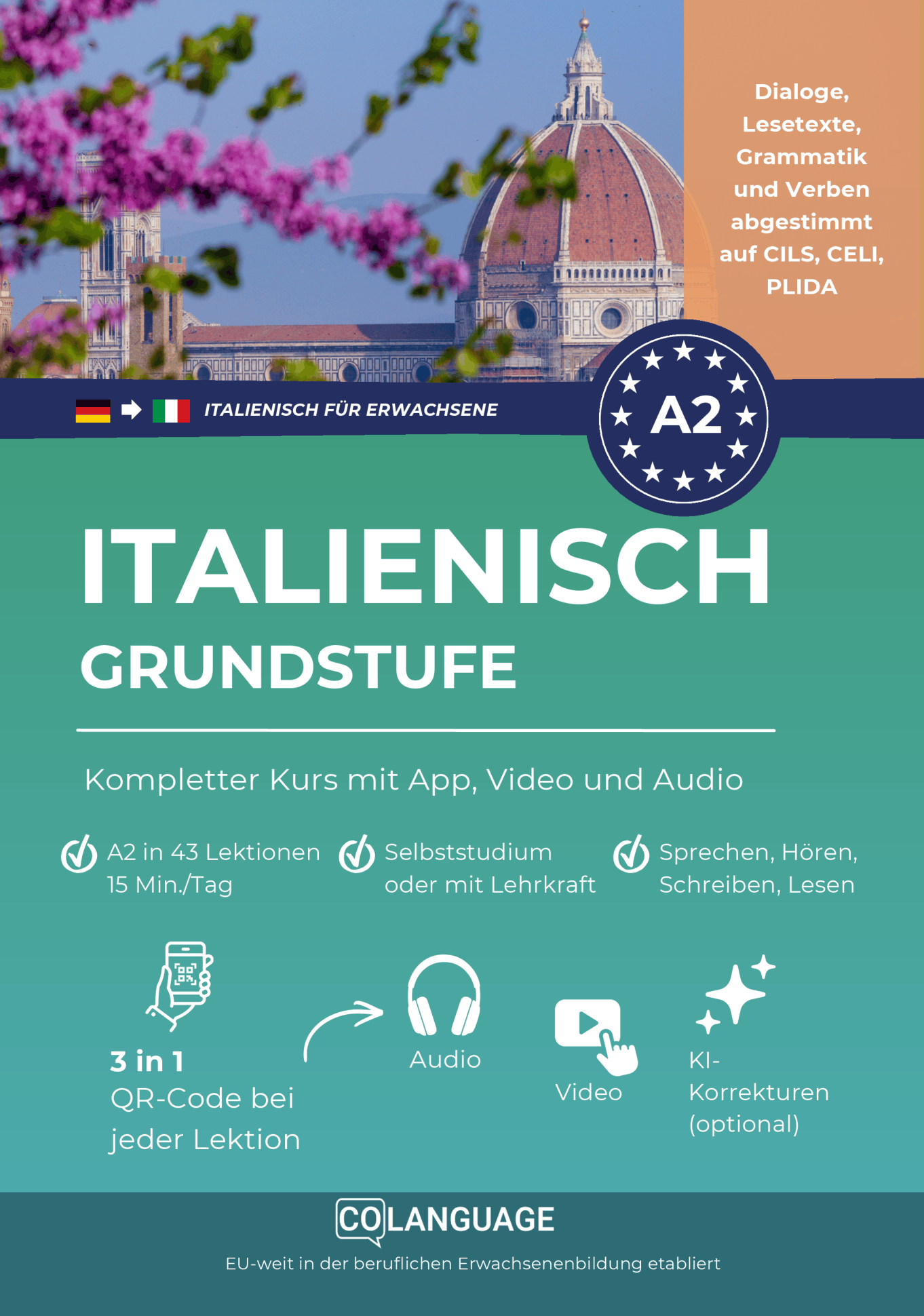
(Why is Simona worried?)Learn Italian A2 elementary: structured course with app, video, and audio
ISBN 979-13-88253-49-2
This app supports this book.